GNRB® Rotab — ACL & Rotation Arthrometer
The GNRB® Rotab adds automated medial tibial rotation measurement to the GNRB® — enabling objective assessment of both anterior tibial translation (ACL) and the rotational component of knee laxity in a single examination. Requires the LDA® Couch.
Description
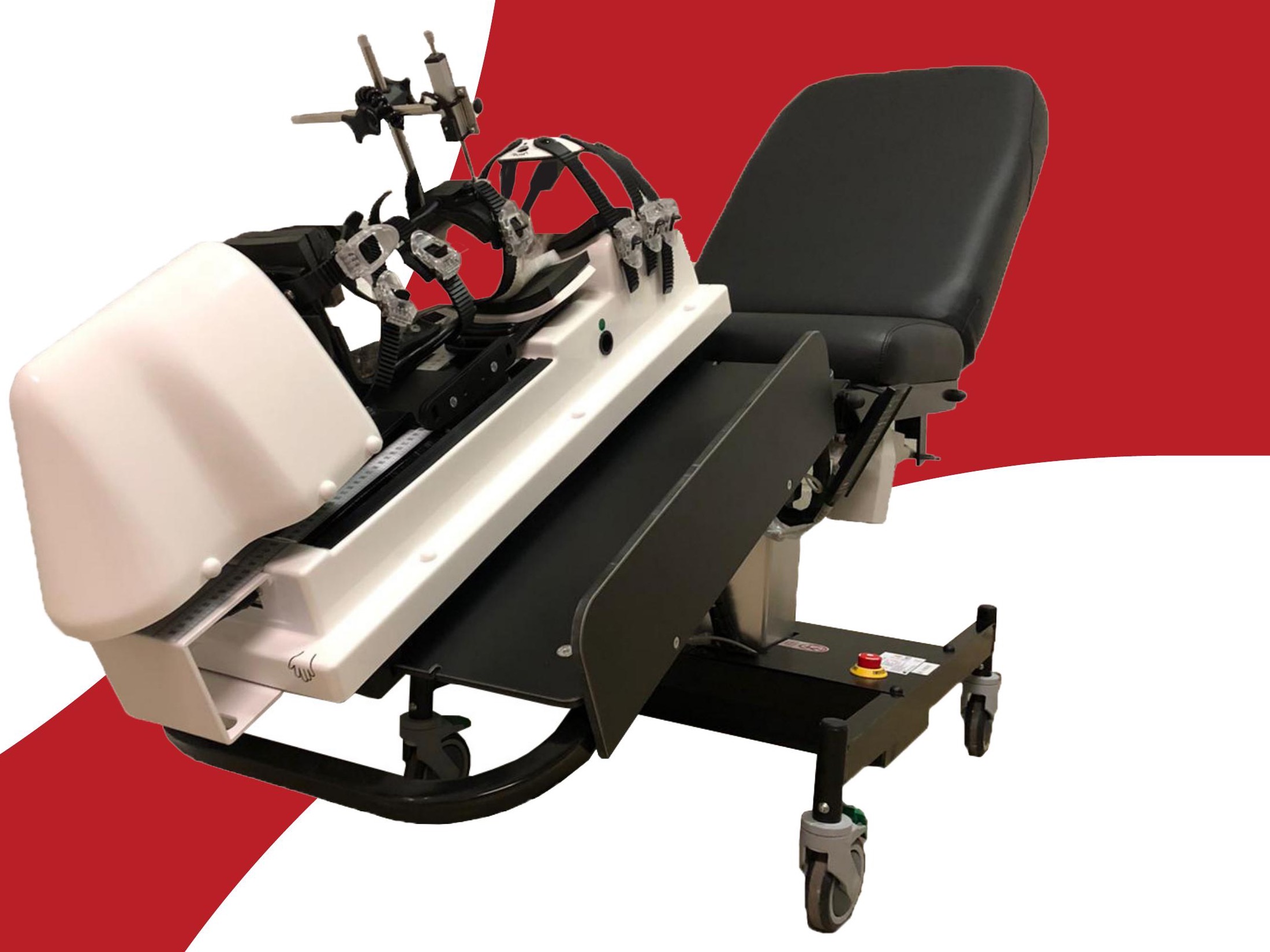
The GNRB® Rotab is the rotational configuration of the GNRB® system — combining the established automated ACL assessment (anterior tibial translation) with the Rotab module, which measures medial tibial rotation under controlled torque.
Rotational laxity is increasingly recognised as a clinically important component of ACL instability. The pivot-shift phenomenon — the rotational subluxation of the tibia that ACL-deficient patients experience during activity — is driven not only by anterior tibial translation but also by medial rotation of the tibia. Patients can have relatively normal anterior translation but significant rotational laxity, and this correlates with subjective instability and risk of re-rupture.
The Rotab is a rotating platform that mounts to the standard GNRB® setup. It applies torque to the tibia in the medial direction, recording the angular displacement differential between the injured and contralateral knees. This measurement is independent of the anterior translation assessment and is performed within the same examination session.
In a single session, the GNRB® Rotab produces: an anterior tibial translation curve (ACL) and a medial rotation displacement differential — both with comparison against the contralateral knee. This combination is particularly relevant for:
— Pre-operative assessment of combined translational + rotational instability, which may influence reconstruction strategy (e.g., lateral extra-articular tenodesis alongside intra-articular ACL reconstruction) — Post-operative monitoring where restoration of rotational stability is a specific surgical goal — Research comparing surgical techniques that differ in their control of rotational versus translational laxity
The GNRB® Rotab represents the precursor technology to the DYNEELAX® — which integrates both translation and rotation in a fully automated, single-device platform with improved ergonomics and software.
Key Advantages
Objective Rotational Laxity Measurement
Rotational instability is a key driver of the pivot-shift phenomenon and correlates strongly with subjective ACL instability. The GNRB® Rotab quantifies medial tibial rotation objectively — capturing a dimension of ACL insufficiency that anterior translation alone does not fully characterise.
Combined Translation + Rotation in One Examination
The GNRB® Rotab measures both anterior tibial translation (ACL) and medial tibial rotation in a single session — providing a more complete picture of knee laxity and enabling more targeted surgical planning when both translational and rotational instability are present.
Informs Surgical Decision-Making
The combination of translational and rotational laxity data is increasingly used to guide decisions around lateral extra-articular tenodesis (LET) alongside intra-articular ACL reconstruction — a procedure indicated for patients with high rotational laxity. The GNRB® Rotab provides the pre-operative data to support this decision.
Research-Grade Rotational Data
The Rotab is the predecessor technology that informed the development of the DYNEELAX® rotational platform. Data from the GNRB® Rotab is directly comparable with the growing peer-reviewed literature on rotational knee laximetry from European and Middle Eastern research centres.
Upgrade Path to DYNEELAX®
The GNRB® Rotab is the entry point to combined translation + rotation assessment. Centres requiring the latest integrated platform — with full software automation and improved ergonomics — can transition to the DYNEELAX®, which builds on and extends the GNRB® Rotab methodology.
Included & Optional Accessories
- LDA® Couch (required) — purpose-built examination couch with adjustable angles
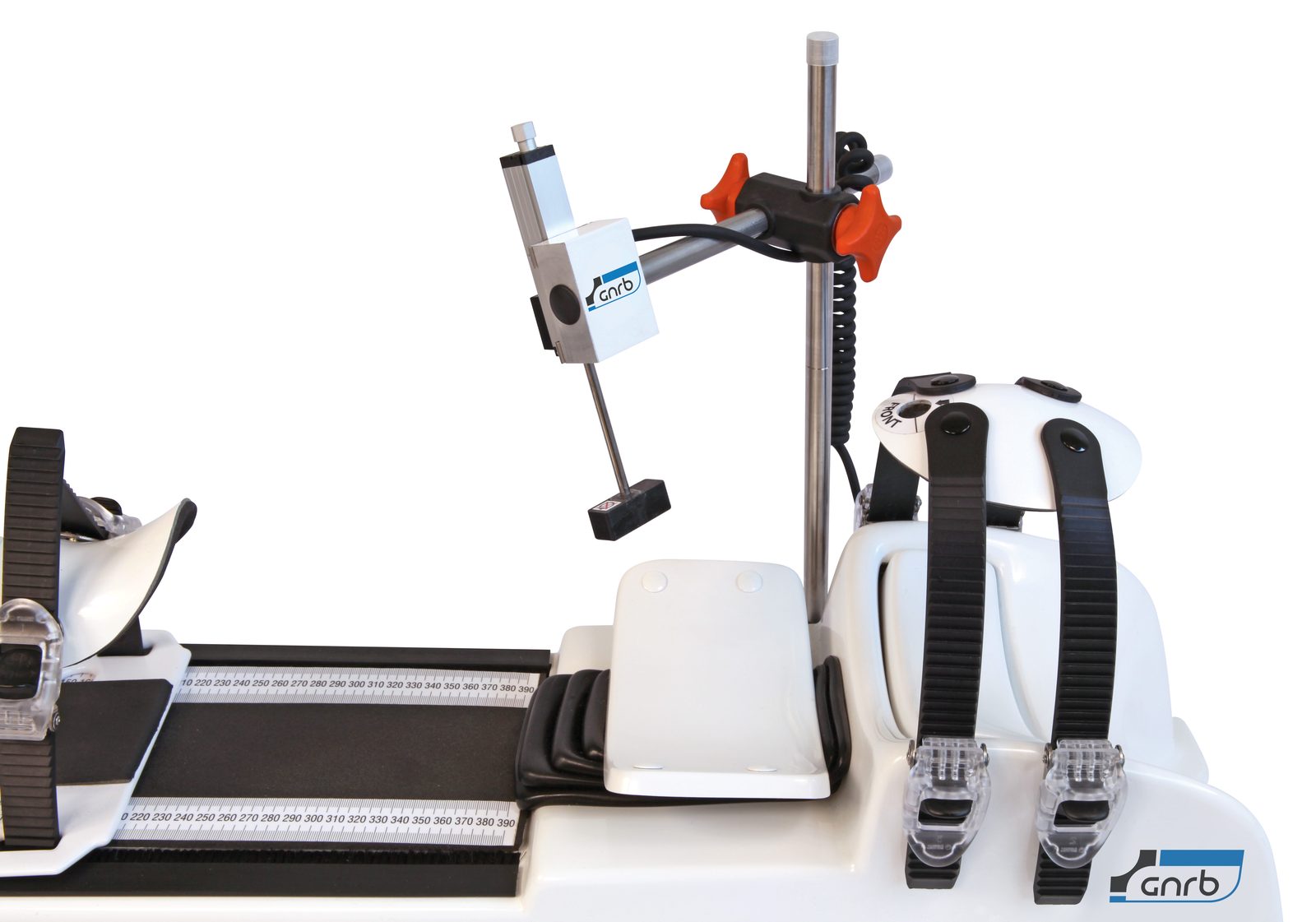
- Rotab Module — rotating platform that applies medial torque to the tibia
- Knee Cup — standardises knee position and tightening force
- Foot Locker — secures the patient's foot for accurate testing
- Knee Locker — locks the knee angle and records tightening values
- Ruler — records device position for session-to-session comparability
Technical Specifications
| ACL Assessment | Automated anterior tibial translation — forces up to 200 N (300 N maximum) |
| Rotational Assessment | Automated medial tibial rotation via Rotab module |
| Rotation Output | Angular displacement differential (degrees) between injured and contralateral knee |
| Translation Output | Force-displacement compliance curve + displacement differential (mm) + ΔP2 slope |
| Test Position | Supine, knee at appropriate flexion angle |
| LDA® Couch | Required — included in GNRB® Rotab configuration |
| Rotab Module | Rotating platform applying medial torque to tibia during assessment |
| Force Application | Automated — no examiner hand contact during measurement |
| Countries in Use | 50+ (GNRB® platform) |
| Certification | CE Medical Device |
Related Products
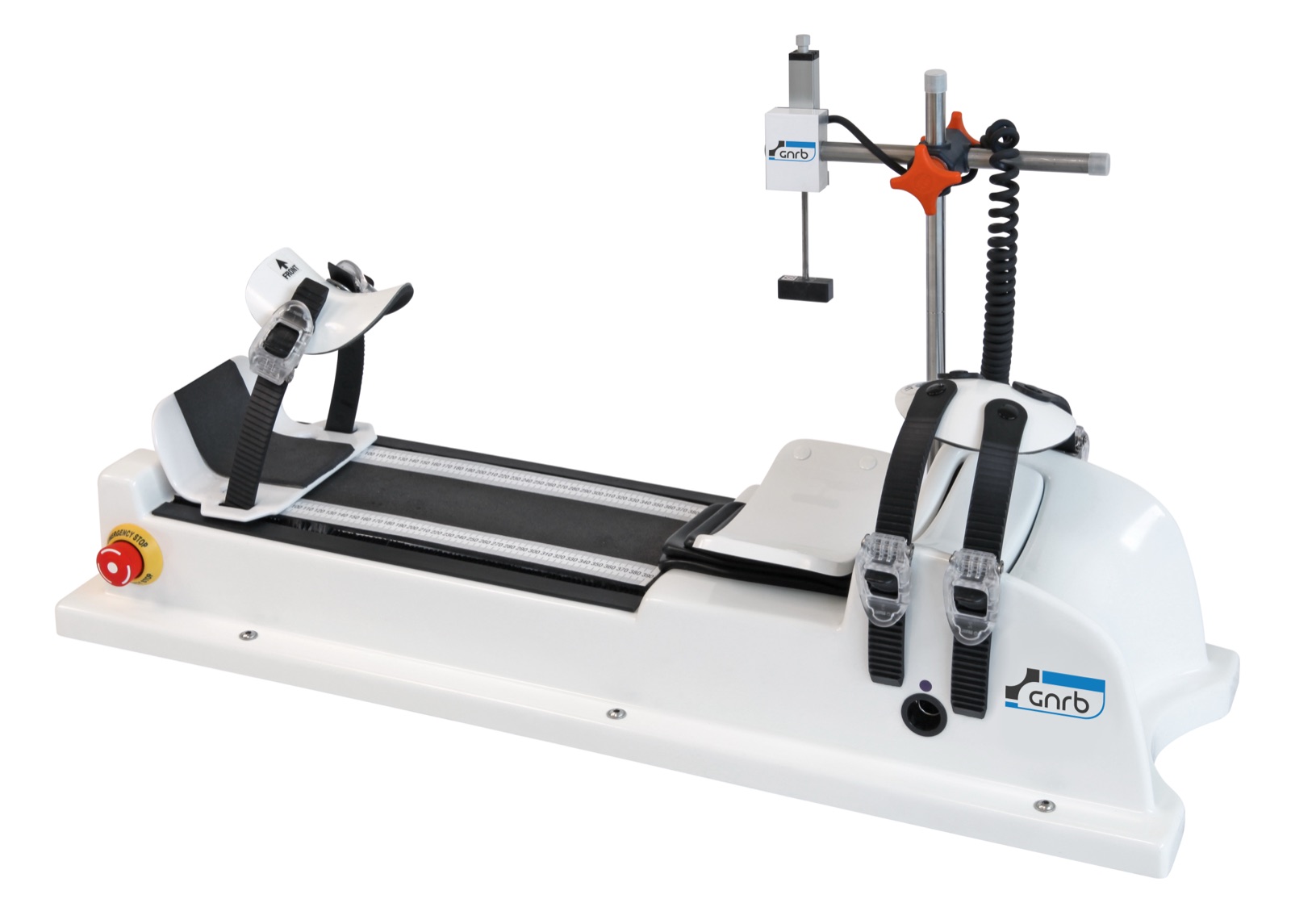
GNRB® Knee Arthrometer
View Details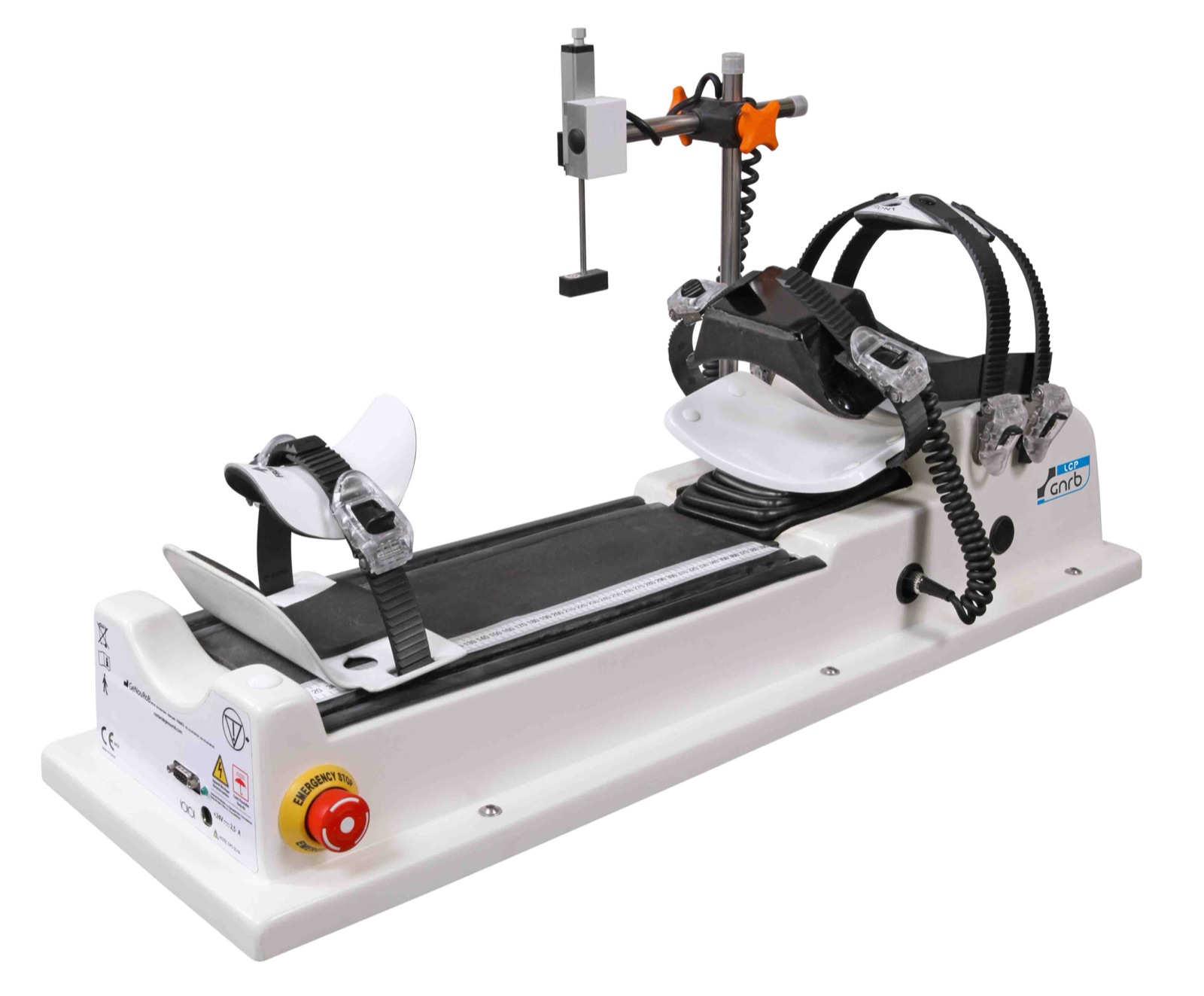
GNRB® PCL — ACL & PCL Arthrometer
View Details