GNRB® PCL — ACL & PCL Arthrometer
The GNRB® PCL adds automated posterior tibial translation measurement to the GNRB® — enabling objective assessment of both the ACL (anterior) and PCL (posterior) in a single examination. Requires the LDA® Couch for PCL testing.
Description
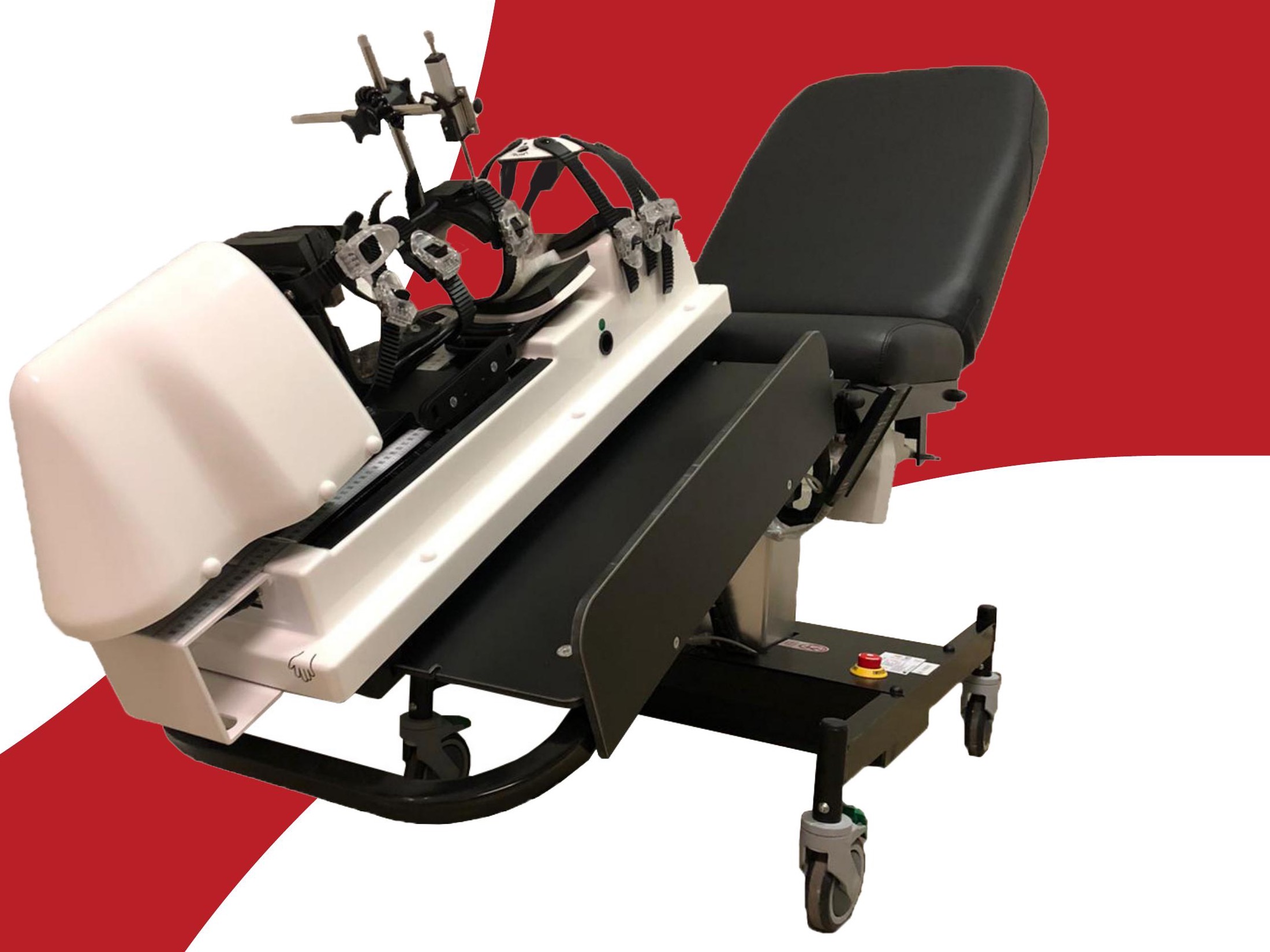
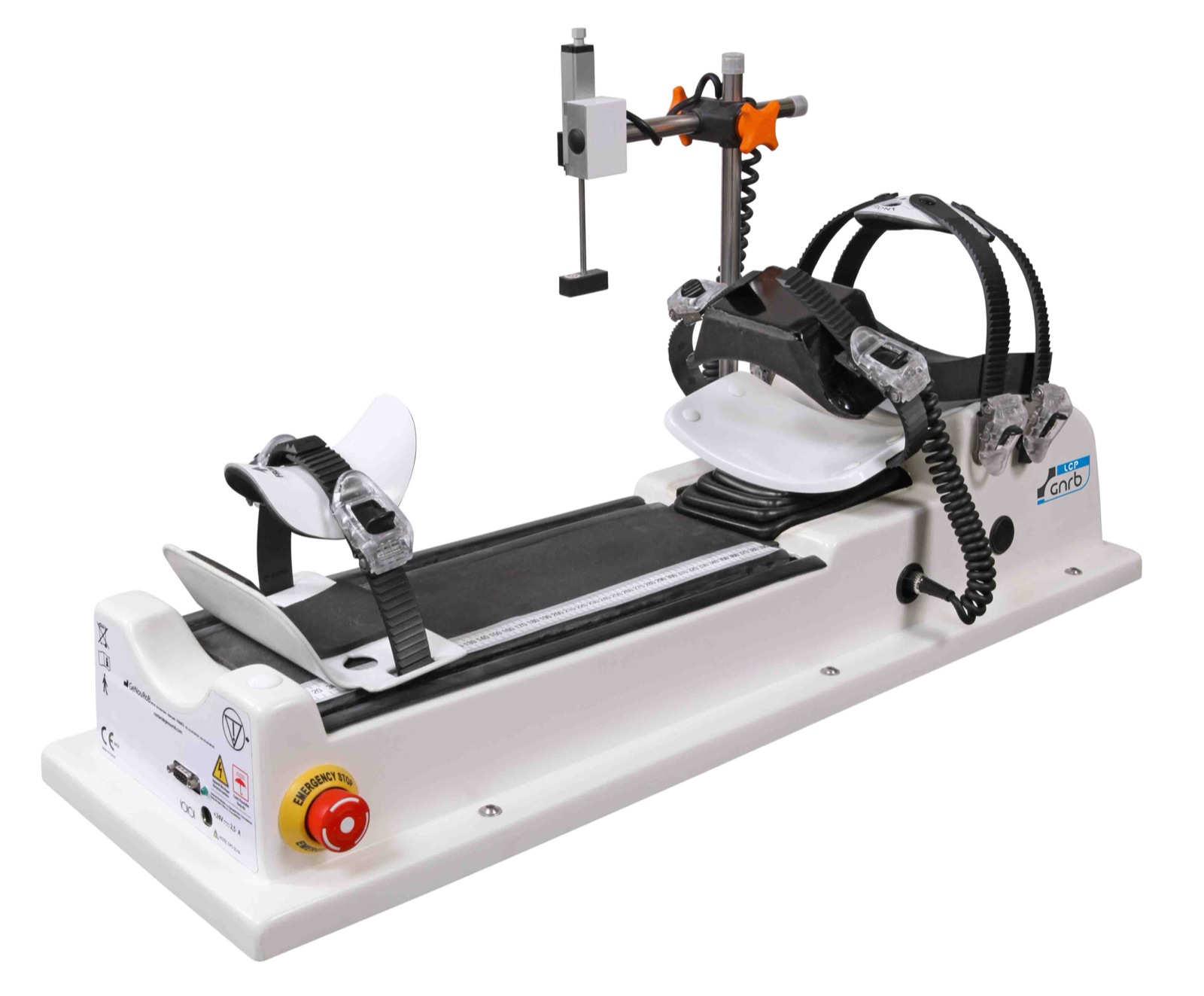
The GNRB® PCL is the dual-ligament configuration of the GNRB® system — combining the established automated ACL assessment (anterior tibial translation) with a PCL module that applies controlled posterior forces via a dedicated platform on the upper calf surface.
PCL injuries are frequently underdiagnosed using clinical examination alone. The standard tests — posterior drawer, posterior sag sign — are qualitative and examiner-dependent, and their reproducibility across time or between examiners is poor. In complex multi-ligament knee injuries, the inability to quantify each ligament's contribution independently makes reconstruction planning significantly more difficult.
The GNRB® PCL addresses this by applying the same LDA® methodology to posterior assessment: the examiner pre-specifies the posterior force before each test, the device delivers it automatically, and the resulting force-displacement curve captures the PCL compliance in the same objective, reproducible format used for ACL testing.
In a single examination session, the GNRB® PCL produces: an anterior tibial translation curve (ACL), and a posterior tibial translation curve (PCL) — both with displacement differentials and ΔP2 compliance slopes for comparison against the contralateral knee.
The LDA® Couch is required for PCL testing. It positions the patient supine with the knee at the appropriate flexion angle and provides the stable platform for posterior force application. Centres already using the GNRB® for ACL testing can upgrade to the PCL configuration by adding the PCL module and LDA® Couch.
The GNRB® PCL is particularly valuable in high-energy knee trauma, knee dislocations, and post-operative monitoring of PCL grafts — any clinical context where objective PCL quantification is needed alongside ACL assessment.
Key Advantages
Objective PCL Assessment Where Clinical Tests Fall Short
PCL injuries are consistently underdiagnosed with manual examination. The GNRB® PCL applies precisely defined posterior forces to generate quantified compliance curves for the PCL — delivering the same objectivity and reproducibility to posterior assessment that the GNRB® already provides for the ACL.
Complete ACL and PCL Measurement in One Session
The GNRB® PCL captures both anterior (ACL) and posterior (PCL) tibial translation in a single examination session — producing displacement differentials and ΔP2 compliance slopes for both axes and both knees for direct comparison.
Essential for Multi-Ligament Knee Injuries
High-energy knee injuries and complex reconstructions require precise characterisation of each ligament's contribution to instability. The GNRB® PCL quantifies ACL and PCL laxity independently — giving surgeons the objective data they need for reconstruction planning and post-operative monitoring.
Upgrade Path from Standard GNRB®
Centres already using the GNRB® for ACL assessment can upgrade to the PCL configuration by adding the PCL module and LDA® Couch — protecting the existing investment while expanding clinical capability.
Included & Optional Accessories
- LDA® Couch (required for PCL testing) — purpose-built examination couch with adjustable angles
- PCL Module — applies automated posterior tibial translation for PCL assessment
- Knee Cup — standardises knee position and tightening force
- Foot Locker — secures the patient's foot for accurate testing
- Knee Locker — locks the knee angle and records tightening values
- Ruler — records device position for session-to-session comparability
Technical Specifications
| ACL Assessment | Automated anterior tibial translation — forces up to 200 N (300 N maximum) |
| PCL Assessment | Automated posterior tibial translation — forces pre-specified before each test |
| PCL Application Method | Dedicated platform applies posterior force to upper calf surface |
| Output | Force-displacement compliance curves for both anterior and posterior axes + ΔP2 slopes + displacement differentials |
| Test Position | Supine, knee at appropriate flexion angle |
| LDA® Couch | Required for PCL testing — included in GNRB® PCL configuration |
| Force Application | Automated — no examiner hand contact during measurement |
| Safety | All forces pre-specified — safe pre-op and post-op |
| Countries in Use | 50+ (GNRB® platform) |
| Certification | CE Medical Device |
Related Products
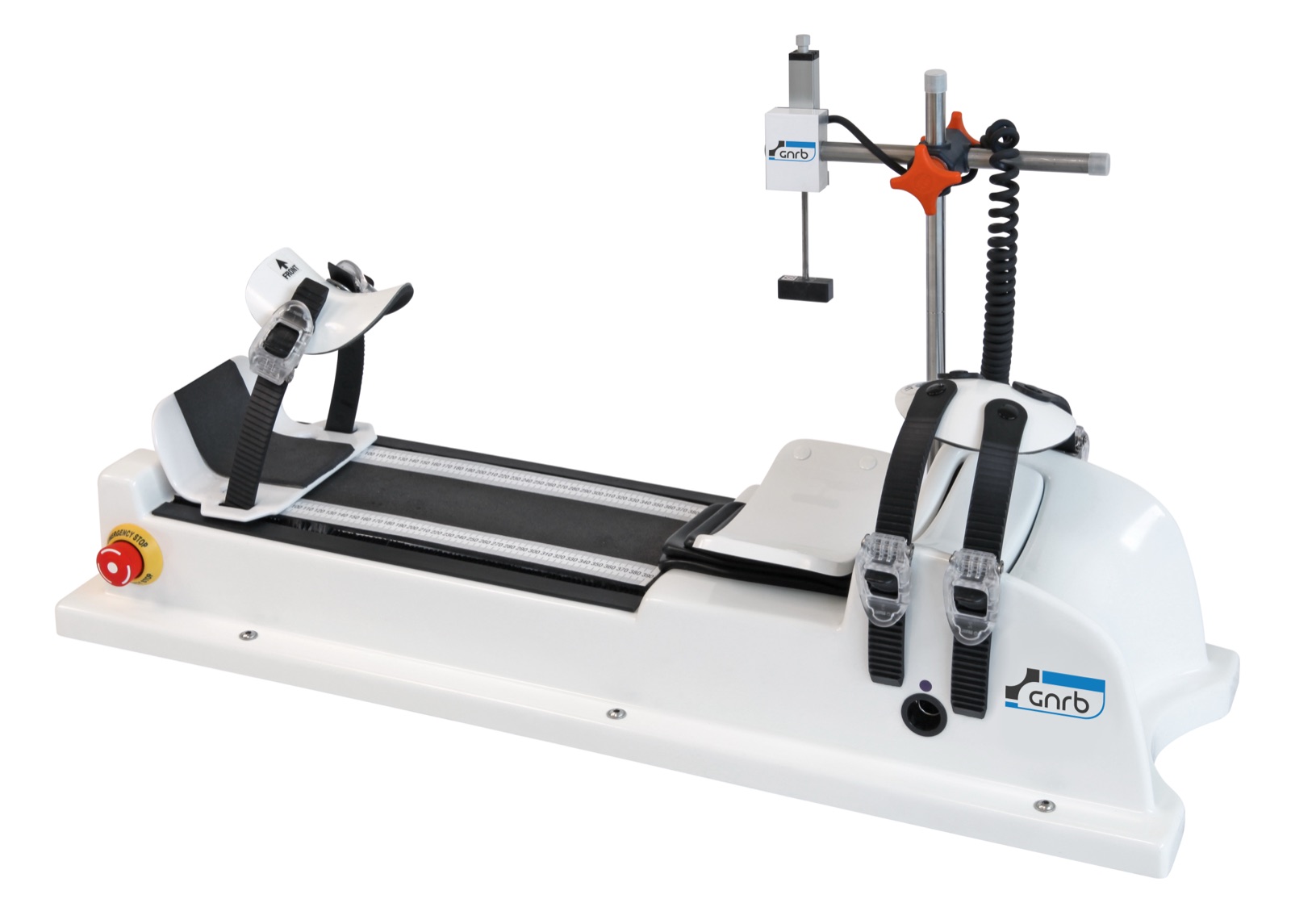
GNRB® Knee Arthrometer
View Details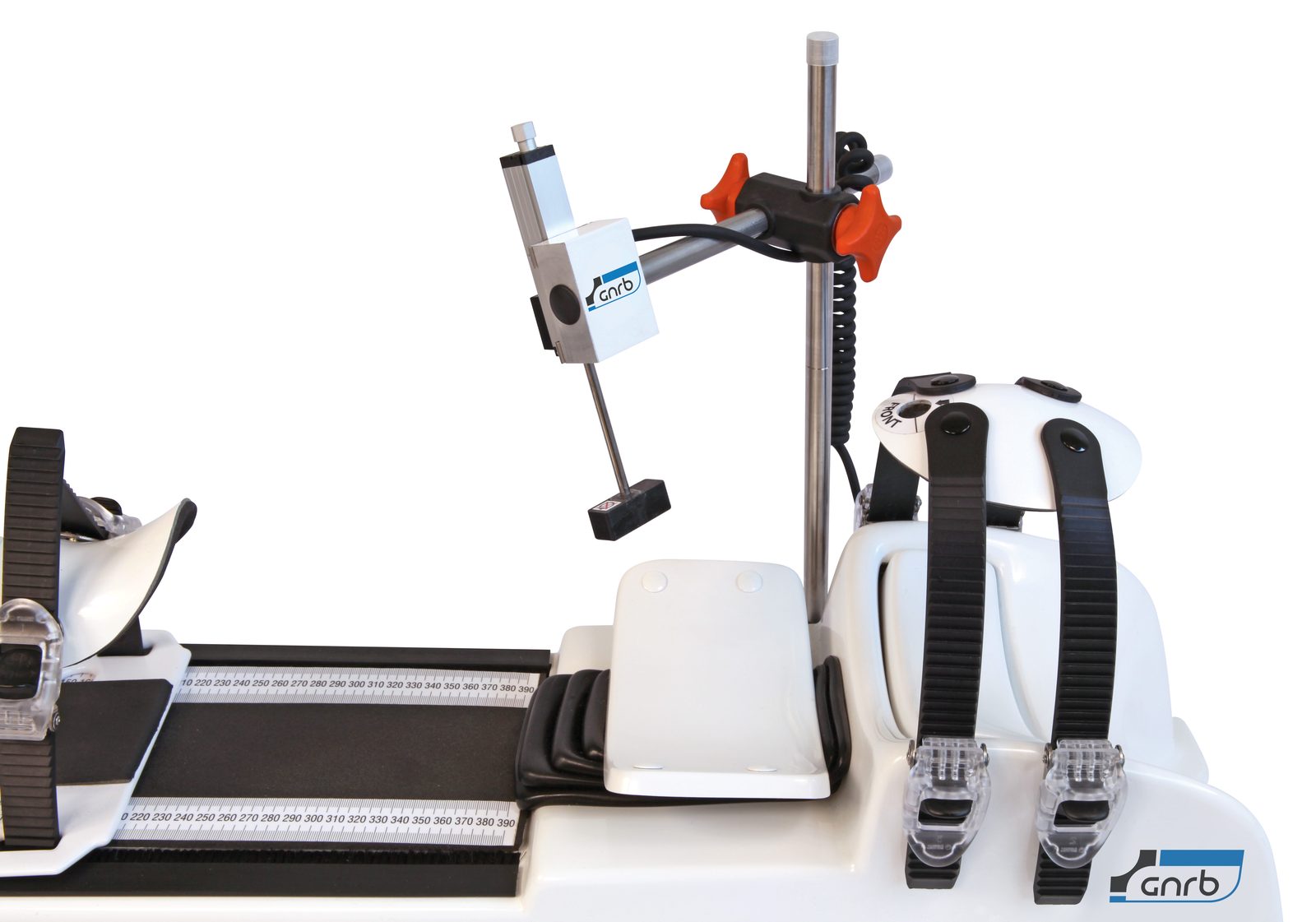
GNRB® Rotab — ACL & Rotation Arthrometer
View Details