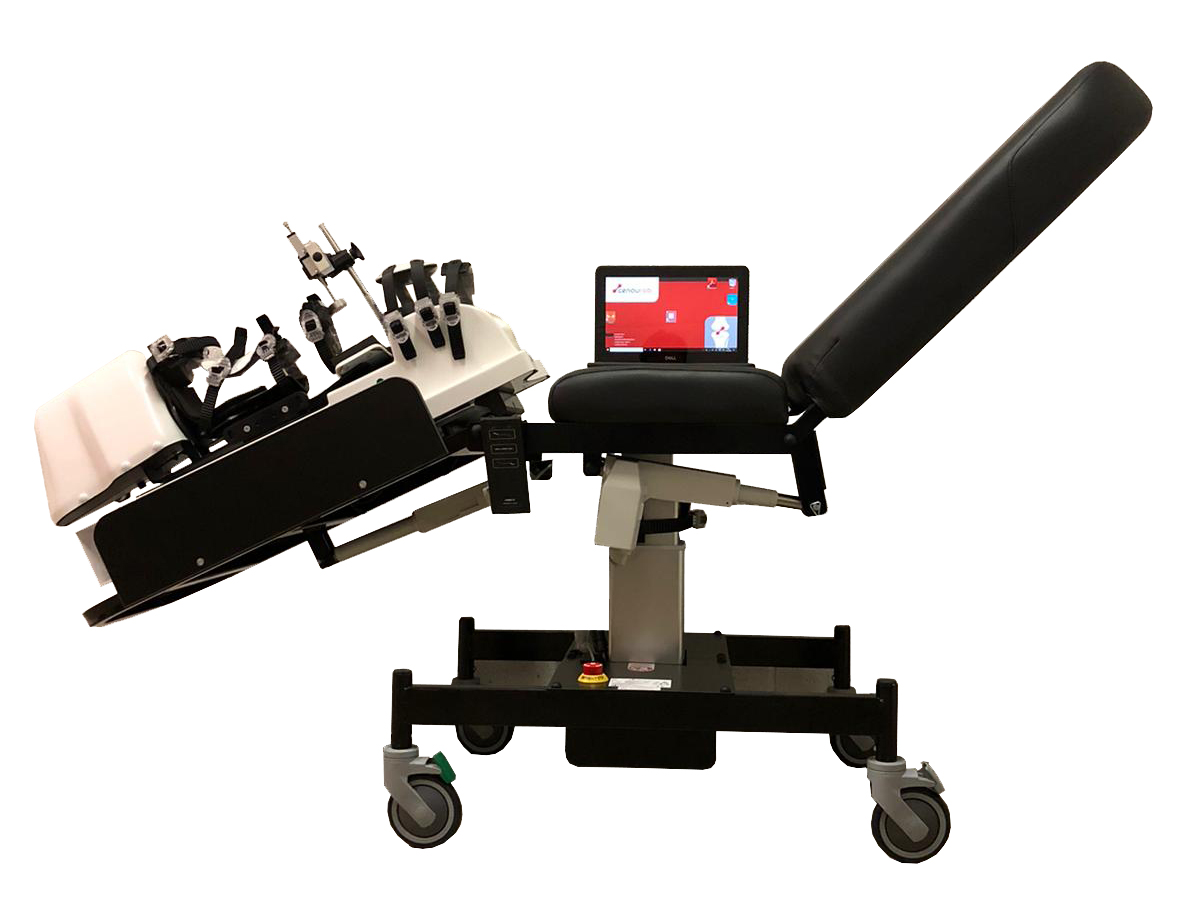
DYNEELAX® PCL — Complete Knee Ligament Assessment
The DYNEELAX® PCL adds automated posterior tibial translation measurement to the DYNEELAX® platform — enabling complete assessment of the ACL (translation + rotation) and the PCL in a single examination. The only automated system capable of objectively quantifying all three major axes of knee laxity.
Download Brochure (PDF)Description
The DYNEELAX® PCL is the complete knee ligament configuration of the DYNEELAX® system — combining the standard ACL assessment capabilities (anterior translation and tibial rotation) with the PCL Option module, which adds automated posterior tibial translation. Together, they enable objective, reproducible assessment of all major knee ligamentous structures from a single platform.
PCL injuries are frequently underdiagnosed in clinical practice. The standard clinical examination tests — posterior drawer, posterior sag sign — are subject to the same limitations as ACL tests: qualitative, examiner-dependent, and poorly reproducible across time. Complex knee injuries involving both cruciate ligaments are particularly challenging: multi-ligament knee injuries require precise characterisation of each structure's contribution to instability before any reconstruction planning can begin.
The PCL module connects to the standard DYNEELAX® and applies controlled posterior translation forces via a dedicated platform on the upper surface of the calf. Forces are pre-specified by the clinician before each test — exactly as with the ACL assessment — ensuring the examination is safe in both the pre-operative and post-operative context.
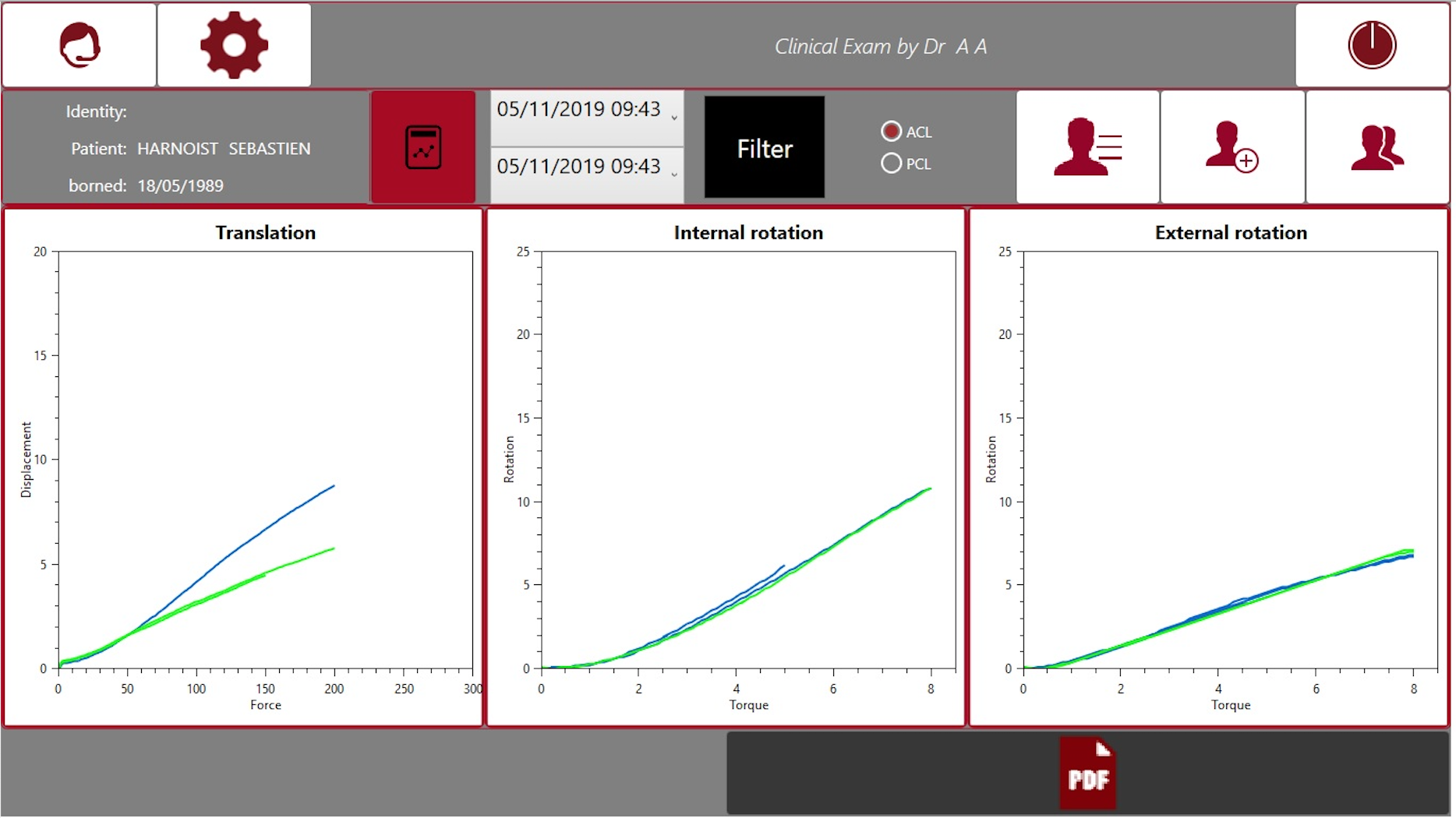
In the DYNEELAX® PCL configuration, a single examination captures: anterior tibial translation (ACL), tibial rotation (peripheral stabilising structures and ACL rotational component), and posterior tibial translation (PCL). This complete picture is especially critical for:
— High-energy knee injuries and knee dislocations, where multi-ligament involvement must be systematically assessed — Complex ACL + PCL reconstruction planning, where the contribution of each ligament to instability must be quantified — Post-operative monitoring of PCL grafts, where objective measurement enables comparison against the contralateral knee and tracking of graft maturation over time
The DYNEELAX® PCL inherits all the research-validated reliability of the DYNEELAX® platform — ICC 0.91–0.96 (Nascimento et al., Aspetar, 2024) — and is backed by the same 15-year evidence base established through the GNRB® and ROTAM® devices.
Key Advantages
Complete Knee Ligament Assessment in One Device
The DYNEELAX® PCL assesses the ACL (translation), peripheral stabilisers (rotation), and PCL (posterior translation) in a single examination session — providing a complete, objective picture of all major knee ligamentous structures without changing systems or repositioning the patient.
Objective PCL Diagnosis — Where Clinical Tests Fall Short
PCL injuries are consistently underdiagnosed with manual examination. The DYNEELAX® PCL applies precisely defined posterior forces to generate quantified compliance curves for the PCL — delivering the same objectivity and reproducibility to PCL assessment that DYNEELAX® already provides for the ACL.
Essential for Multi-Ligament Knee Injuries
High-energy knee injuries and complex reconstructions require precise characterisation of each ligament's contribution to instability. The DYNEELAX® PCL quantifies ACL, rotational, and PCL laxity independently — giving surgeons the evidence base they need for multi-ligament reconstruction planning.
Safe Pre-Op and Post-Op for PCL Assessment
All posterior forces are pre-specified before each test — the device never exceeds the clinician's prescribed limit. This makes DYNEELAX® PCL safe for post-operative PCL graft monitoring from the early rehabilitation phase, and for serial comparison across the course of recovery.
Backed by the DYNEELAX® Evidence Base
The DYNEELAX® PCL builds on the same platform validated with ICC 0.91–0.96 in a 2024 reliability study at Aspetar Orthopaedic and Sports Medicine Hospital (Nascimento et al.) — and the same 15-year research history established through GNRB® and ROTAM® technology in 50+ countries.
Included & Optional Accessories
- LDA® Couch (included) — purpose-built examination couch with remotely adjustable angles
- PCL Option Module (included) — applies automated posterior tibial translation for PCL assessment
- Knee Cup — standardises knee position and tightening force for both knees
- Foot Locker — secures the patient's foot for accurate testing
- Knee Locker — locks the knee and records tightening values
- Ruler — records device position for session-to-session result comparability
Technical Specifications
| ACL Translation | Anterior tibial translation — forces up to 200 N (300 N maximum) |
| ACL Rotation | Internal and external tibial rotation — adjustable torques |
| PCL Testing | Automated posterior tibial translation — forces pre-specified before each test |
| PCL Application Method | Dedicated platform applies posterior force to upper calf surface |
| Complete Assessment | ACL translation + ACL rotation + PCL translation — all in one examination session |
| Slope Analysis | ΔP2 compliance curve slopes for both anterior and posterior axes |
| Included Couch | LDA® Couch — remotely adjustable angles for standardised positioning |
| Software | User-guided — displays translation, rotation, and PCL compliance curves together |
| Data Storage | Automatic — saves all test parameters and patient positions |
| Safety | All forces pre-specified — safe pre-op and post-op for all ligament assessments |
| Countries in Use | 50+ worldwide (DYNEELAX® platform) |
| Certification | CE Medical Device |
Related Products
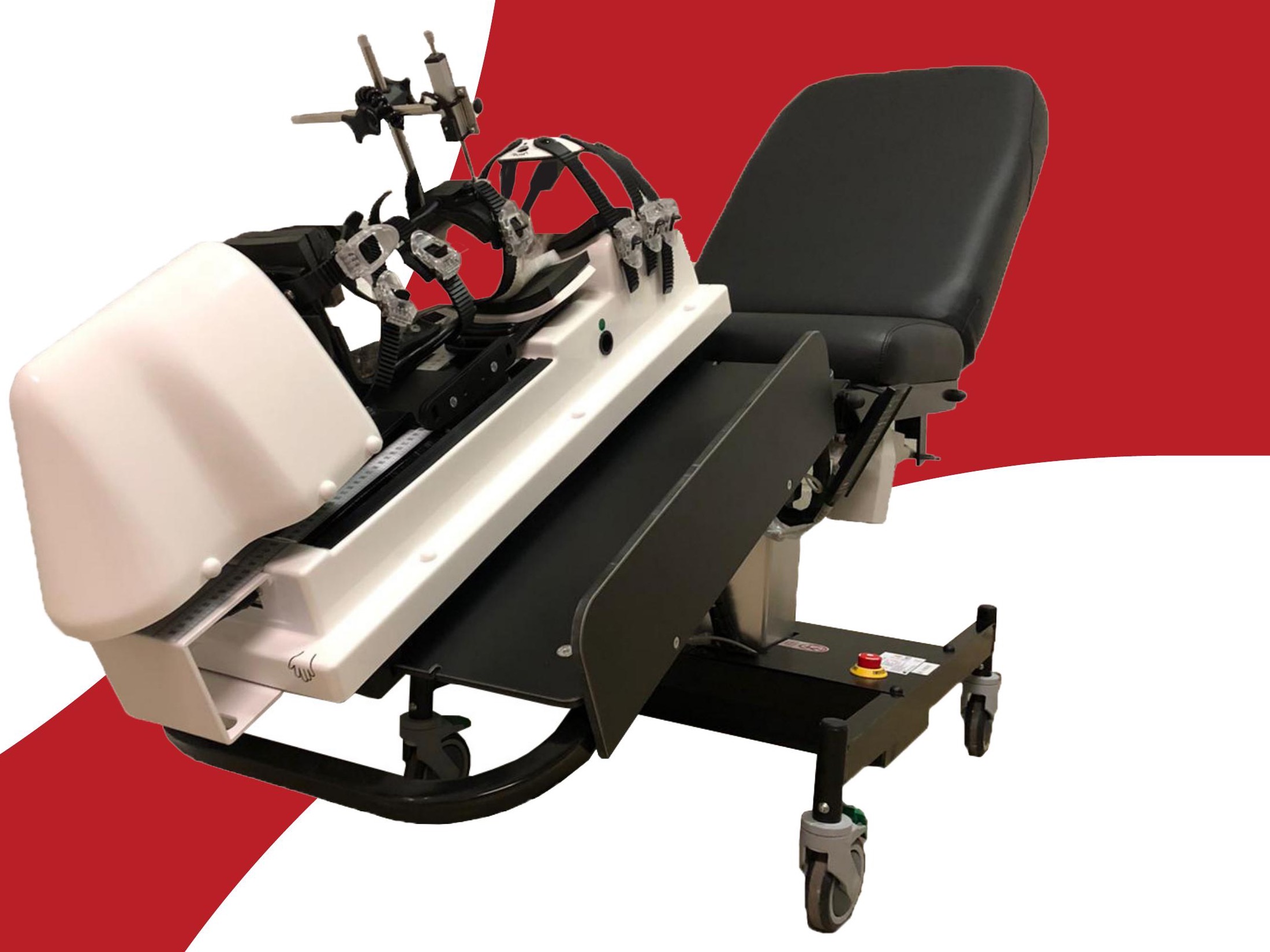
DYNEELAX® Dynamic Knee Laximetry Arthrometer
View Details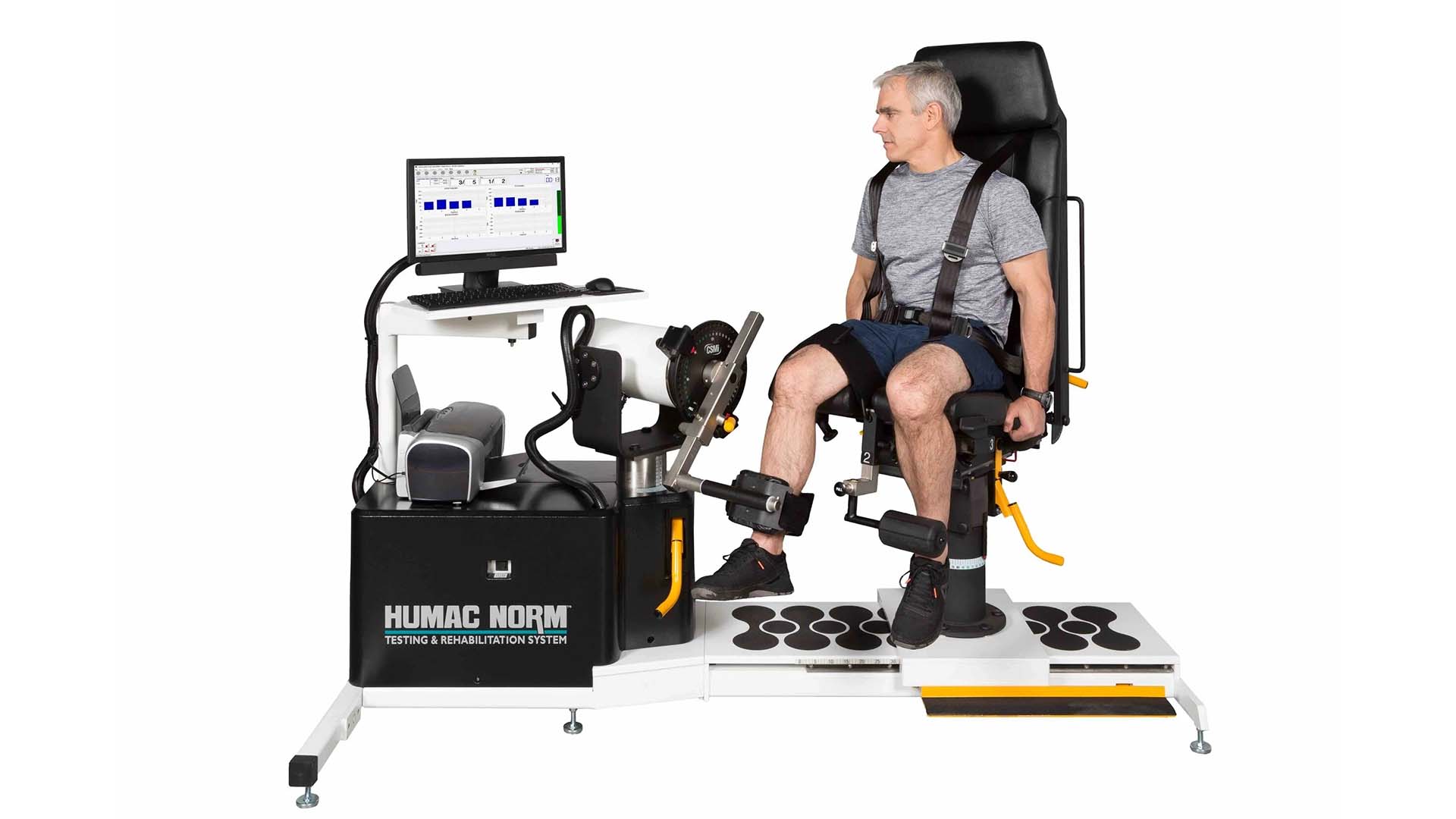
HUMAC NORM Isokinetic Dynamometer
View Details